
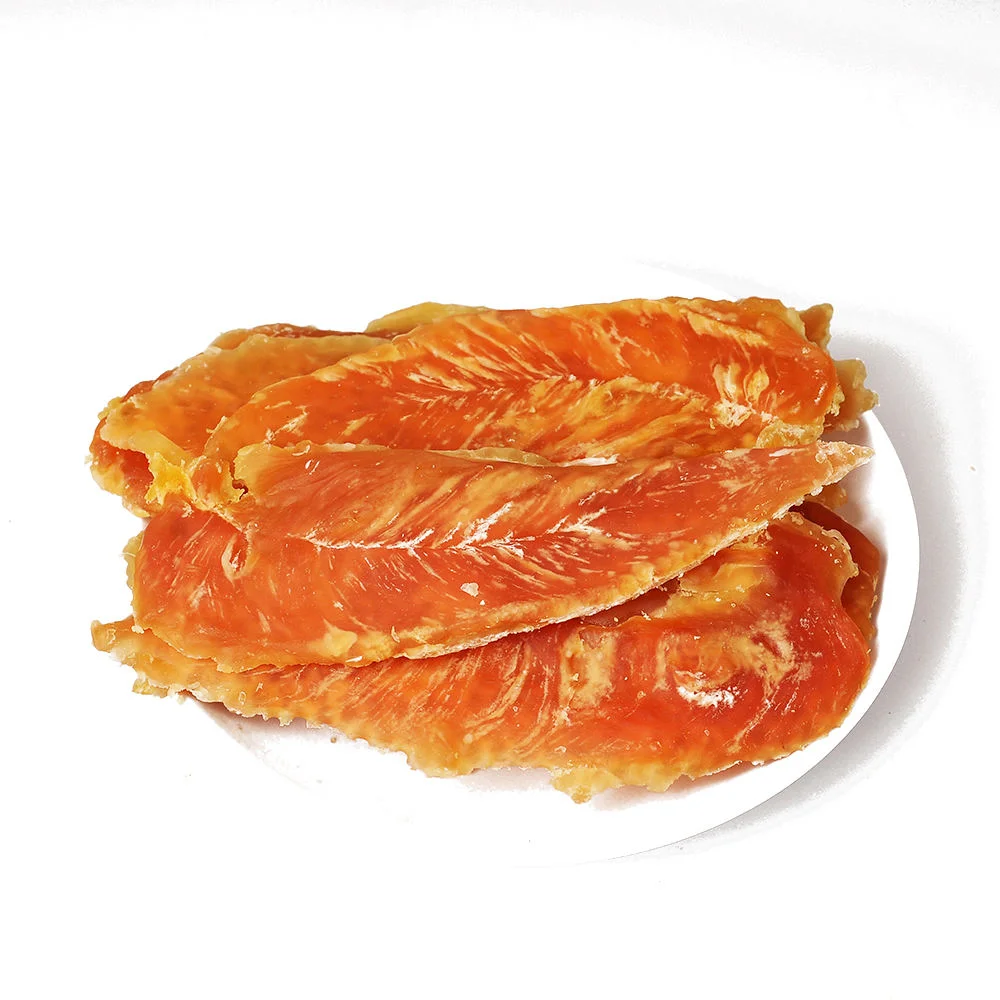
Hot-air drying turns meat into a concentrated, textured treat by removing water with heated, circulating air. The useful question is not simply how hot the dryer runs, but how the full process affects moisture, texture and consistency.
Assess the drying process together with the finished-product specification. Temperature alone cannot establish nutritional quality, microbial safety or shelf life.
1. How hot-air drying works
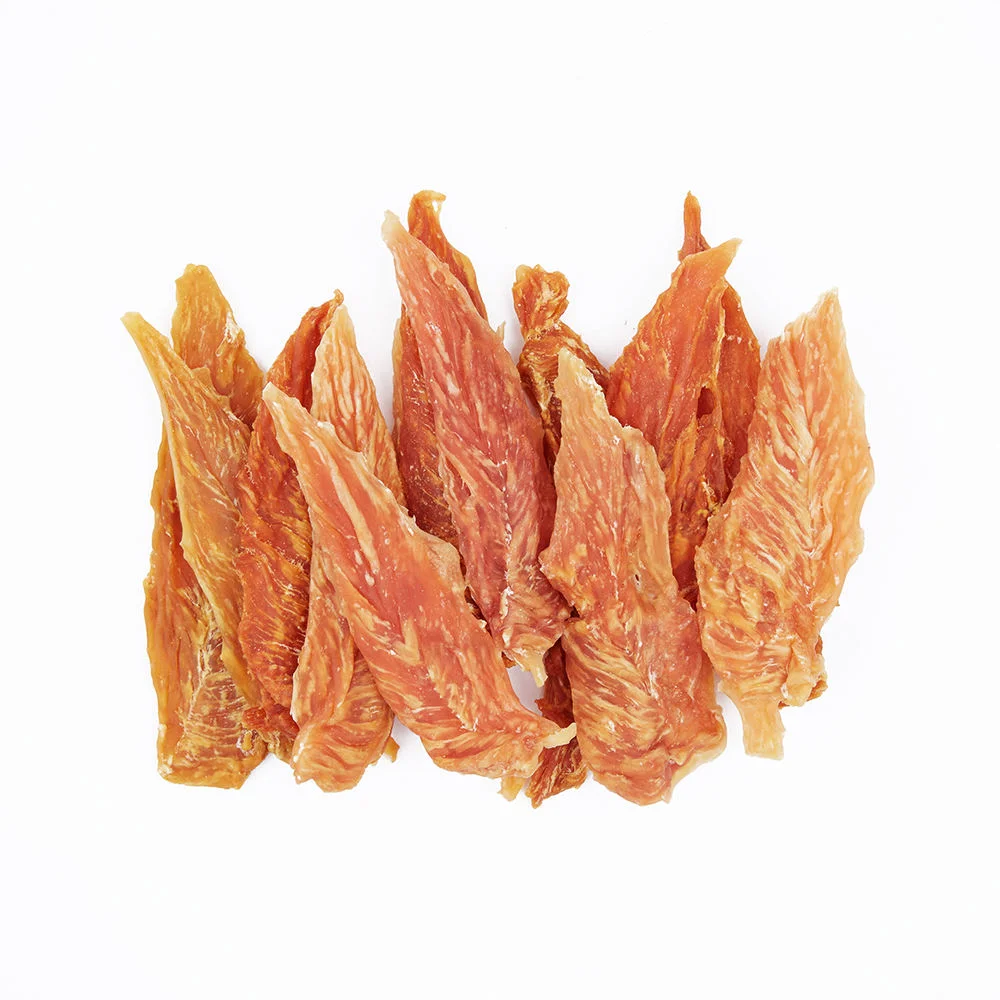
Heat, airflow and water removal
Heat supplies energy for evaporation, while moving air carries moisture away. As drying progresses, water inside the meat must move towards the surface. Thickness, temperature, airflow and drying time therefore work together.
Meat-drying literature also describes changes in shrinkage, firmness, colour and oxidation. The aim is a repeatable texture supported by measured product quality. [2]
Image: chicken jerky from the BSG media library, used to illustrate product format. It is not a sample from the cited studies.
2. What one chicken-jerky study measured
Zhu and colleagues compared four drying methods in a 2024 laboratory study. The hot-air treatment used the conditions below. [1]
| Parameter | Study value |
|---|---|
| Chicken slice thickness | 1.00 ± 0.10 cm |
| Dryer temperature | 75 ± 2 °C |
| Target final moisture | 10.00 ± 1.00% |
These are experimental settings, not a universal production recipe or BSG specifications. The comparison found differences in colour, protein structure and fat oxidation between methods; faster drying did not improve every quality measure.
For product development, specify the desired endpoint and validate the process for the actual formulation, piece size and equipment. Do not copy a published temperature without its experimental context.
3. Moisture and shelf life need separate evidence
Moisture content describes the amount of water in a product. Water activity (aw) describes how available that water is. A percentage such as 10% moisture does not, by itself, tell you the water activity or storage life.
Codex explains that pathogens can remain viable in low-moisture foods even when they cannot multiply. Its code addresses human food; the principle helps explain why drying and microbial control must be evaluated separately. [3]
What to request from a supplier
Ask for agreed moisture and water-activity limits, evidence supporting microbial controls, and shelf-life testing in the intended packaging. Include storage conditions and instructions after opening in the product brief.
4. Define the finished treat
Agree the ingredient list, piece dimensions, texture and analytical specification before comparing quotations. Consider colour and aroma alongside oxidation and storage performance; a darker or harder treat is not automatically a better one. [2]
Explore our chicken jerky format or discuss your product requirements. For a broader comparison, read our freeze-dried vs air-dried guide.
References
- Zhu R. et al. (2024). Comparison of four drying methods in terms of the drying efficiency and physicochemical properties of chicken meat. Food Physics, 1, 100010. [1]
- Mediani A. et al. (2022). A comprehensive review of drying meat products and the associated effects and changes. Frontiers in Nutrition, 9, 1057366. [2]
- Codex Alimentarius (2015). Code of Hygienic Practice for Low-Moisture Foods, CXP 75-2015. [3]
Frequently Asked Questions
Is hot-air drying the same as air-drying?
The terms can overlap. Hot-air drying specifically uses heated air; “air-dried” alone does not define a temperature or heating profile. Ask the manufacturer to describe the process.
What is the best drying temperature?
There is no single setting for every treat. The 75 ± 2 °C value above belongs to one chicken-jerky experiment. Formulation, thickness, equipment and validated safety controls determine a suitable process. [1]
Does drying destroy all the nutrients?
No. Processing can change protein structure and affect heat-sensitive components and fats. The extent depends on the conditions. Nutrient-retention claims should be supported by analysis of the specific product. [2]
Can moisture content prove a long shelf life?
No. Water activity, microbial controls, oxidation, packaging and storage conditions also matter. A shelf-life claim needs evidence for the finished product in its intended pack. [3]
Which specifications should I request for a private-label project?
Start with ingredients, dimensions, texture, moisture, water activity and nutrient analysis. Also agree packaging, storage instructions and the evidence supporting the proposed shelf life.